
There used to be one game in town: rank on Google, earn clicks, grow your business. SEO teams lived and died by position #1 on the search results page. But in 2026, the game has split into at least three distinct arenas and most marketing teams are only playing in one.
Google Search Results, Featured Snippets, and AI Citations now operate as parallel visibility ecosystems. Each surfaces information differently. Each rewards a different type of content. And critically, each delivers a fundamentally different type of user, with a different conversion intent.
Here's the uncomfortable truth: 60% of all Google searches now end without a single click to any website. Google's AI Overviews now appear in 25.11% of searches, up from just 13.14% in March. And AI-referred traffic, though still a fraction of total volume, converts at up to 23 times the rate of traditional organic visitors.
The battle for visibility has never been more fragmented — or more consequential. This blog breaks down each channel, how they work, and how they differ.
What is an AI Citation?
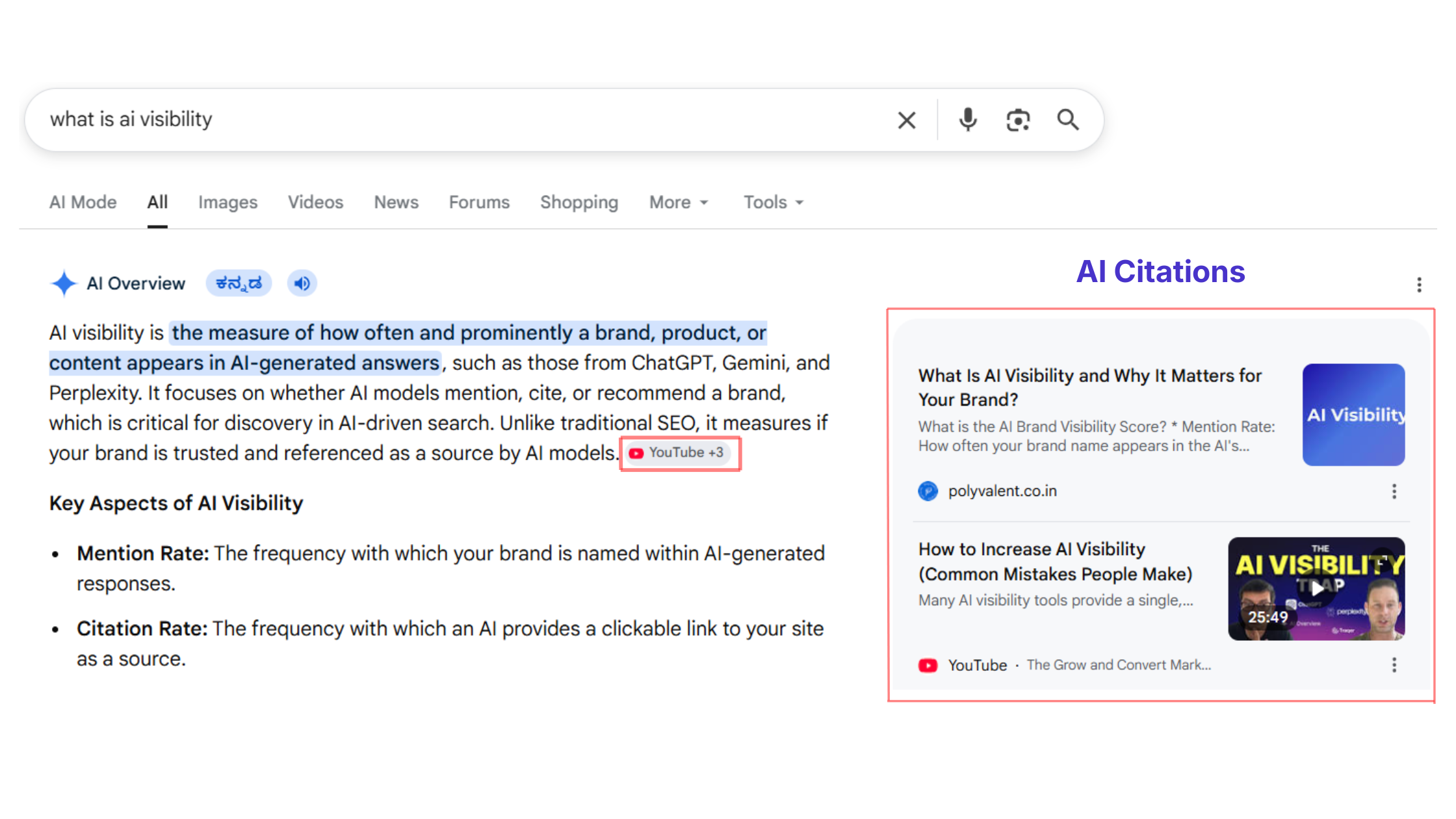
An AI citation is a reference made by a large language model (LLM) — such as ChatGPT, Perplexity, Google Gemini, or Claude — to a specific source (URL, publication, brand, or document) when generating an AI-powered answer. Unlike a traditional hyperlink or SERP listing, an AI citation is embedded within a synthesised response, not presented as a ranked result.
In practice, when a user asks ChatGPT, "What is the best CRM for B2B startups?' and the model responds with a paragraph that links out to or names a specific company's blog post, that's an AI citation. The model has retrieved, evaluated, and decided to surface that source as part of its answer.
Read: What Are AI Citations? How to Find Which Pages ChatGPT and Perplexity Cite
What AI Citations Are NOT
AI citations are not rankings—they are inclusion-based, not position-based.
Key differences
- Not always links:
Platforms like ChatGPT may cite sources as plain text without clickable URLs. - Not stable:
Citation patterns can change by 40–60% month-over-month. - Not evenly distributed:
The same brand can see citation volume vary by hundreds of times across platforms, such as between Grok and Claude.
Are AI Citations Accurate?
AI citations are partially reliable but inconsistent, depending on the platform, query type, and whether real-time retrieval is used.
The Accuracy Spectrum
| Accuracy Level | System Type | Example Platform | Why It Performs This Way |
|---|---|---|---|
| High accuracy | Retrieval-based | Perplexity AI | Fetches live web content before generating answers, reducing hallucination risk |
| Moderate accuracy | Hybrid (retrieval + model) | ChatGPT (with browsing) | Combines real-time data with model reasoning; improves accuracy but not fully reliable |
| Lower accuracy | Training-only | Pretrained LLMs (no retrieval) | Relies on static training data, increasing risk of hallucinated or outdated citations |
AI Hallucinated Citations
AI hallucinated citations are references that a language model generates that either (a) do not exist — fabricated authors, titles, or URLs — or (b) exist but were never associated with the claim being made. They are the LLM equivalent of a confident, articulate lie.
The hallucination problem isn't new, but its scale in 2025–2026 has reached a level that demands serious attention from anyone producing or consuming AI-generated content.
Hallucinated citations often appear in AI responses to very specific factual queries — 'What study shows that X?' or 'Who said Y?' — where the model reaches for specificity it doesn't have. For marketers, regularly spot-checking AI responses about your brand is an essential practice.
Read: Gemini vs ChatGPT vs Perplexity Citations: How AI Citations are generated in 2026
What are Google Search Results?
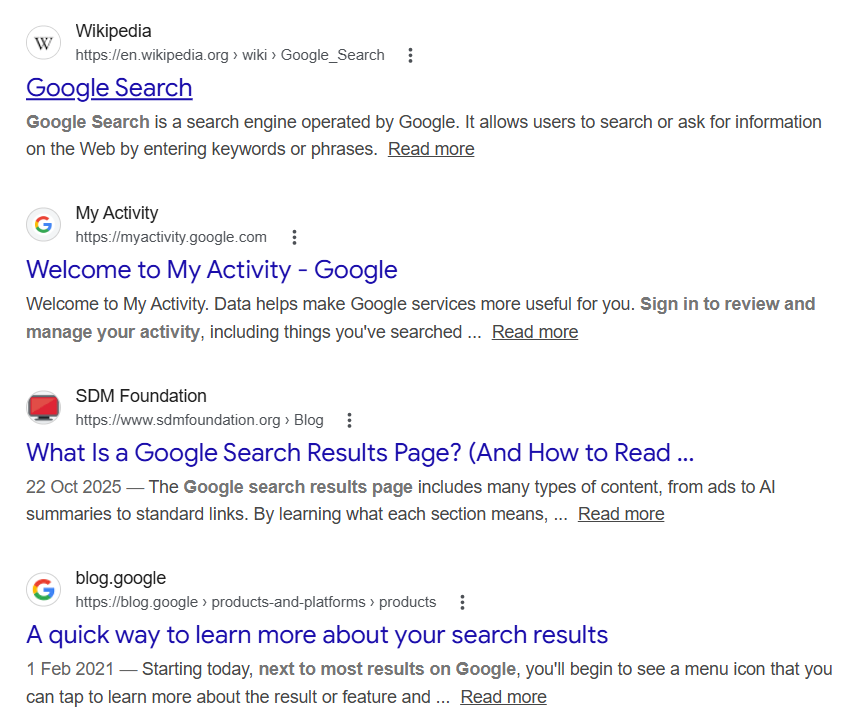
Google Search Results are the ranked list of web pages, ads, knowledge panels, image carousels, local packs, and other rich features that Google returns in response to a query. Traditional 'blue links' are organic results ranked by Google's algorithm based on relevance, authority, and user experience signals.
For over two decades, the SERP was the primary battleground for digital visibility. Ranking on page one — and specifically in positions 1–3 — drove the majority of organic traffic for most businesses.
CTR drops from 15% to 8% when an AI Overview is present on a SERP. -Pew Research
AI Citations vs Google Search Results
| Dimension | AI Citations | Google Search Results |
|---|---|---|
| Mechanism | Generated by LLMs using retrieval + synthesis | Ranked by search algorithms (relevance, authority, UX) |
| User experience | Single synthesised answer with sources | List of ranked results (10+ links) |
| Click behavior | Low — answers consumed within interface | Higher — users choose links to visit |
| Traffic volume | Lower overall traffic | Primary source of web traffic |
| Conversion quality | Higher intent, higher conversion likelihood | Broader intent, moderate conversion rates |
| Stability | Non-deterministic; varies by query/session | More stable; updates over time |
| Optimization | Generative Engine Optimisation (GEO) | Search Engine Optimisation (SEO) |
| Primary signals | Entity authority, freshness, structure, factual density | Backlinks, keywords, E-E-A-T, page experience |
| Attribution | Often appears as direct or unknown traffic | Clearly attributed as organic search |
What are Backlinks?
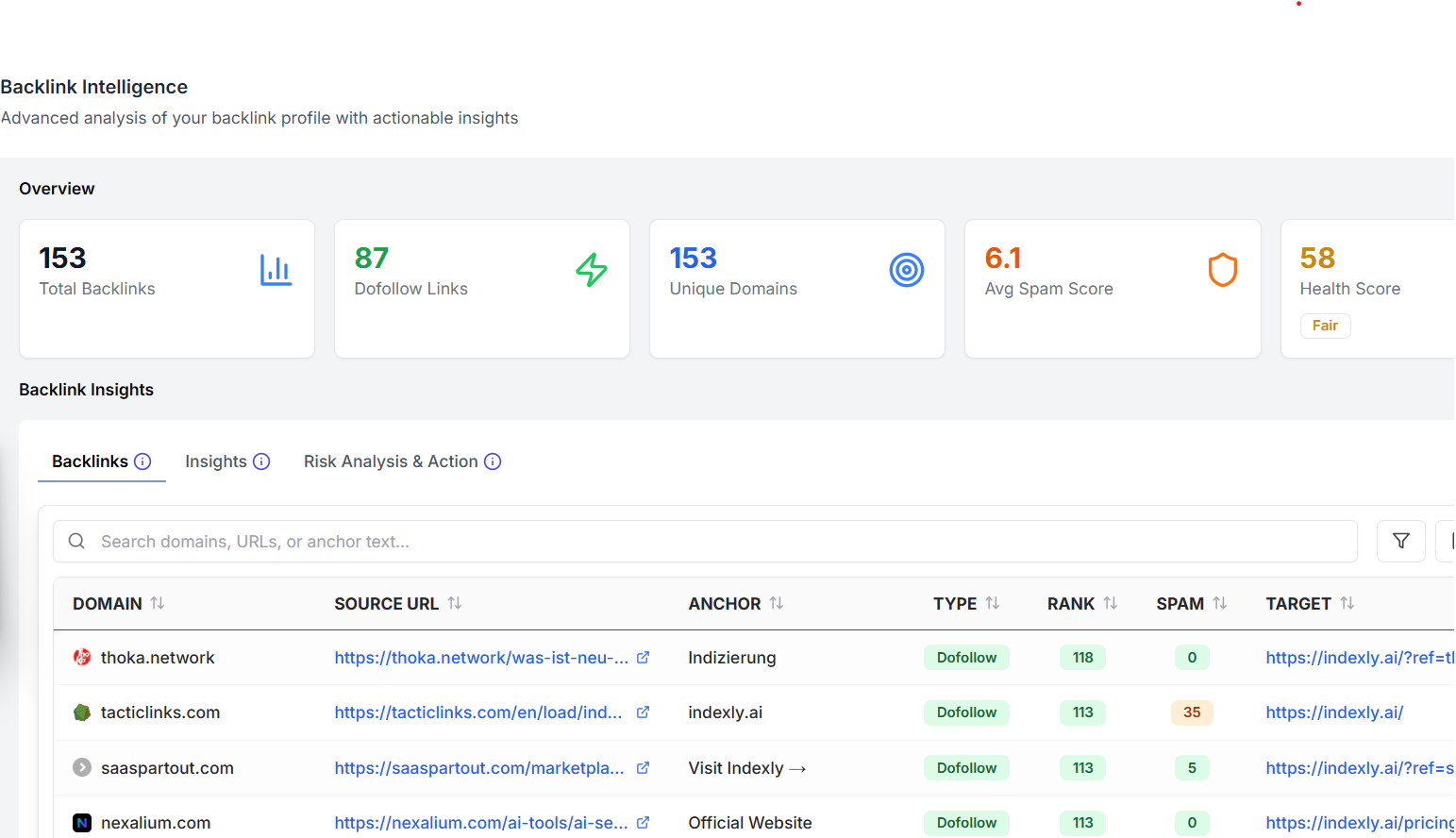
Backlinks are incoming links from other websites that signal trust, authority, and relevance to search engines.
When another site links to your page, it serves as an endorsement—suggesting your content is credible and useful. Search engines rely on these signals to decide which pages deserve higher visibility in search results.
Read: Top 10 Backlink Checker Tools for SEO Success
AI Citations vs Backlinks
Backlinks have historically been a primary signal in traditional SEO, particularly since PageRank established link-based authority as a core ranking factor.
AI citations operate on a broader trust model that includes—but is not limited to—link authority.
| Signal | Impact on SEO | Impact on AI Citations |
|---|---|---|
| Domain authority | Core ranking signal | Strong indirect influence via perceived trust |
| Brand search demand | Limited direct impact | Strong influence on citation likelihood |
| Anchor text | Important relevance signal | Minimal direct impact |
| Wikipedia presence | Moderate | Strong authority signal for LLMs |
| Forum mentions (e.g., Reddit) | Limited | Frequently used in real-time retrieval systems |
| Content freshness | Moderate | High importance for AI-generated answers |
| Earned media / PR | Builds backlinks | Expands entity presence across sources |
Read: 11 Best AI Citation Tracking Tools for B2B Marketing Teams (UPDATED 2026)
What are Featured Snippets?
A Featured Snippet is a selected search result that Google displays at the top of the SERP — above organic results — in a special format, extracting a specific answer, table, list, or step-by-step guide from a web page to directly answer a user's query. This placement is also informally called 'Position Zero.'
Featured Snippets are still valuable — they confer significant brand authority and earn the highest above-the-fold visibility for non-AI-Overview queries. However, their role has been partially cannibalised by AI Overviews, which often replace them for informational queries.
AI Citations vs Featured Snippets
Featured snippets and AI citations both provide direct answers within search experiences, but they differ in how those answers are generated.
| Dimension | Featured Snippets | AI Citations |
|---|---|---|
| Source | Extracted from a single page | Synthesised from multiple sources |
| Attribution | Always linked | May include links or named sources |
| Optimization target | Individual page | Brand/entity across sources |
| Query type | Specific factual queries | Multi-step or conversational queries |
| Update frequency | Periodic | Dynamic and query-dependent |
| Content format | Short, structured answers | Structured + comprehensive content |
Difference between SEO and AI Citations
SEO and AI citation optimisation (GEO) share a foundation — authoritative content, clean technical structure, and genuine expertise — but they diverge in meaningful ways that require different strategic investments.
The core philosophical difference: SEO optimises for algorithms. GEO optimises for understanding. An LLM doesn't scan keyword density or count backlinks — it interprets meaning, weighs trust signals, and synthesises answers. Content that reads well and explains clearly will always outperform content that ranks well but explains poorly.
The most important thing to understand: SEO and GEO are not opponents. A strong organic ranking increases your probability of AI citation — SERP position #1 earns a 33.07% AI Overview citation probability, while position #10 drops to 13.04% .
What's new in 2026 is that SEO alone is no longer sufficient. A brand with strong rankings but low entity authority, thin brand search volume, and minimal third-party presence will increasingly lose AI citations to competitors who have invested in brand-building alongside technical SEO.
Read: AI Citations Made Easy: A Guide to Tracking Sources
Conclusion
The rules of visibility have changed.
For years, success meant ranking #1. Today, that’s only part of the equation.
Google Search Results drive traffic. Featured Snippets capture attention. AI citations shape decisions before a click even happens.
This is the shift:
from ranking → to being referenced
from traffic → to influence
The brands that win aren’t just visible—they’re trusted enough to be cited.
Build authority. Structure your content. Show up everywhere your audience learns.
And most importantly, track how AI sees and recommends you.
Indexly helps you do exactly that — track where you’re cited, monitor AI platforms, and optimise for consistent inclusion.
Because in a zero-click world, being recommended matters more than being ranked.
FAQs
What is the difference between an AI citation and a backlink?
Backlinks are hyperlinks that signal authority to search engines, while AI citations are references made by LLMs inside generated answers. Backlinks are algorithm-driven; AI citations are model-driven.
Can you guarantee an AI citation?
No. AI citations are non-deterministic and vary by query and session. You can increase the likelihood through strong content, structure, and brand authority.
Are AI citations replacing Featured Snippets?
Partially. AI Overviews replace some snippets, but both formats still exist. Optimizing for both is the most effective strategy.
How do I track if AI is citing my brand?
Manually test queries on tools like ChatGPT and Perplexity AI, or use tracking tools like Indexly. You can also monitor AI referral traffic in GA4.
How long does it take to get AI citations?
Initial results can appear in 2–4 weeks. Consistent visibility typically takes 60–90 days with ongoing optimization.
Why AI Hallucinated citations happen?
AI hallucinated citations occur because LLMs generate text based on patterns, not verification. When a real source isn’t available, the model may create a plausible-looking reference from its training data.
Can AI Generate Fake References?
Yes. AI can produce fabricated or misattributed citations, especially without real-time retrieval.
How to Get Cited in AI Answers?
- Create clear, structured content that directly answers questions.
- Build strong topical authority in your niche.
- Earn mentions from trusted third-party sites.
- Keep your brand information consistent across the web.
- Publish accurate, updated, and useful content (like guides and comparisons).